Get Marketing Insights First
Subscribe to receive actionable strategies, growth tips, and industry insights delivered straight to your inbox.

Ask me to pick one and I will not hedge: PLA vs ABS vs PETG is a decision about where the finished part has to survive, not a leaderboard of the strongest plastic. For indoor models, prototypes and anything that stays below 50 °C, plain PLA wins on stiffness, detail and cost; PETG takes over outdoors, near water or in rough hands; ABS earns its fumes and enclosure only when heat or chemicals are the real problem. That same triage runs through most 3D printer plastic choices.
PLA, or polylactic acid, is polymerized from plant starches such as corn and sugarcane, which is why it smells faintly sweet when it melts: its polymer chains are rigid and semi-crystalline, giving high stiffness with very little ability to absorb shock. PETG is ordinary PET, the drink-bottle plastic, modified with glycol to slow crystallization. ABS is a petroleum-based terpolymer of acrylonitrile, butadiene and styrene, where the rubbery butadiene phase supplies impact toughness.
Chemistry explains nearly every difference you feel at the printer. Rigid semi-crystalline chains print sharp and stiff but crack instead of bending. Slow-crystallizing glycol-modified chains bend further and resist water and UV better. The rubber phase in ABS keeps it from shattering, while its styrene content makes it soluble in acetone and unusually sensitive to drafts, cooling and chamber temperature. Thermal limits follow the same chain logic, so heat resistance tracks chemistry rather than price.
Numbers never tell the whole story, but they kill a lot of bad advice fast. The table below collects ranges from manufacturer datasheets and independent filament testing rather than single-brand marketing, so read each figure as a band and not a fixed value. One company’s PLA behaves noticeably differently from another’s, and PETG shifts with moisture content and print temperature, so any published value is only a starting point for your own testing.
| Property | PLA | ABS | PETG |
|---|---|---|---|
| Tensile strength | About 50 to 60 MPa | About 40 to 45 MPa | About 50 MPa, lower yield point |
| Stiffness (modulus) | About 3.5 GPa | About 2.0 GPa | About 2.0 GPa |
| Impact and fracture toughness | Low, brittle | High, toughest of the three | Moderate to low |
| Heat deflection | About 55 to 60 °C | About 90 to 100 °C | About 70 to 75 °C |
| Warping tendency | Low | High | Low to moderate |
| UV and weather resistance | Poor | Moderate, ASA is better | Good |
| Enclosure needed | No | Yes | Helpful for large parts |
| Acetone vapor smoothing | No | Yes | No |
Reading the table honestly produces a counterintuitive result: PLA usually posts the highest tensile strength and stiffness of the three, PETG sits close on strength but clearly lower on stiffness, and ABS trails both on paper while being the toughest in impact and drop tests. Toughness, the energy absorbed before fracture, and strength, the force at failure, are different measurements that people mix up constantly when arguing about filament.
Heat resistance separates the three far more cleanly than strength does. PLA softens around 55 to 60 °C, PETG holds shape to roughly 70 to 75 °C, and ABS keeps working near 90 to 100 °C, which is why a PLA bracket in a hot car sags while the same part in ABS survives. PETG adds water and UV resistance, and ABS resists many solvents while accepting acetone smoothing.
Every figure above is a range, not a law. Fillers, colorants and additives shift results by ten to twenty percent between brands, moisture in PETG quietly ruins layer adhesion, and layer orientation means a printed part is often far weaker than the filament it came from. Use these numbers to shortlist materials, then confirm them on your own machine before committing to a long print.
Choosing gets easier when you describe the part’s worst day instead of its average one. Will it sit in a hot car, get dropped on concrete, hold a wet load, or simply look good on a shelf? Most arguments about the best filament for 3D printing dissolve the moment the environment is named, because PLA, PETG and ABS each fail in a predictable way.
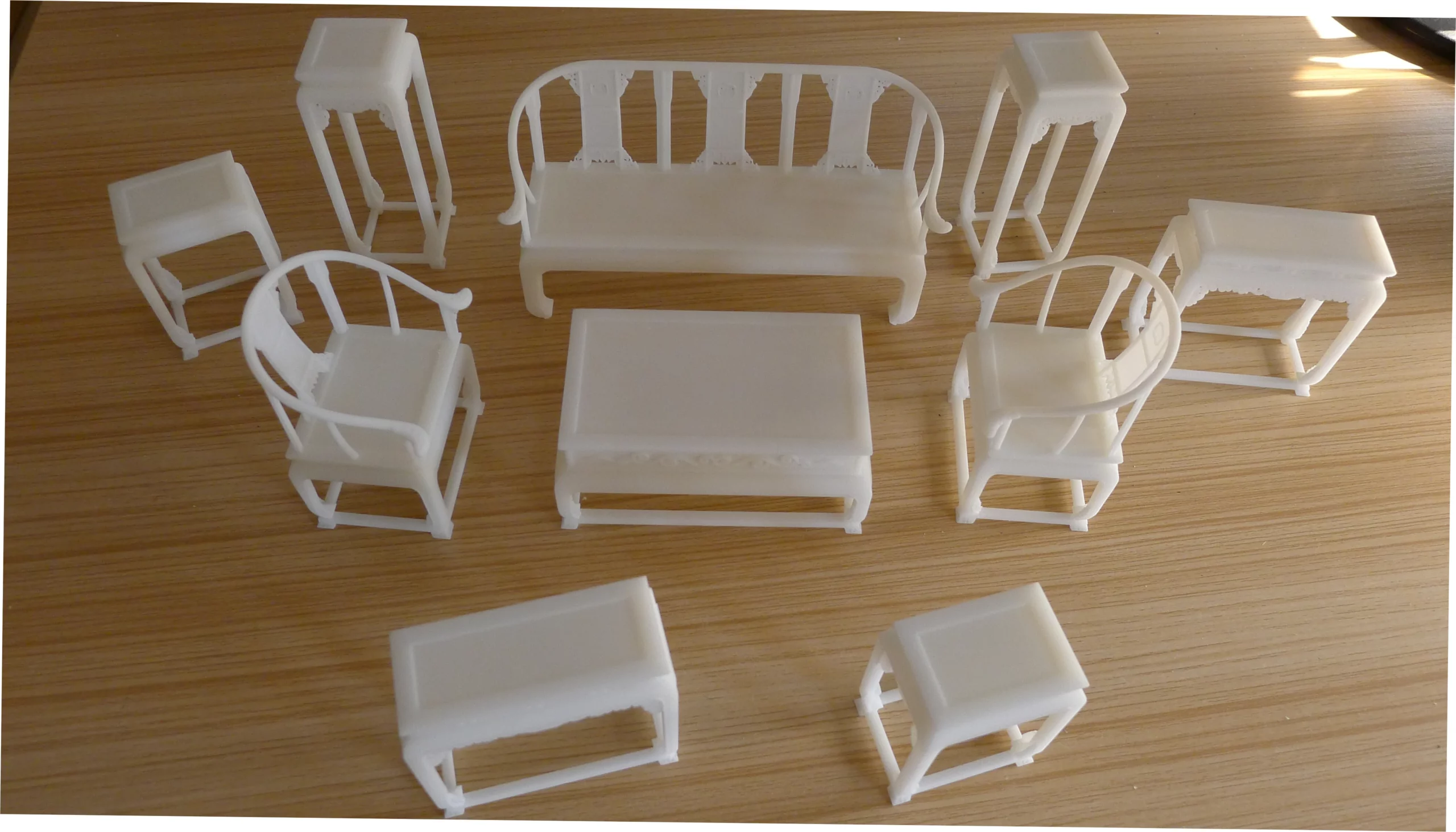
For shelf models, prototypes, and jigs that stay cool, PLA is still the correct default. It prints quickly without an enclosure, holds fine detail, glues well, and costs the least per kilogram. Its brittleness only becomes a problem when a part is dropped repeatedly or loaded under constant pressure, which is exactly where PETG or ABS proves more forgiving over months of use.
Parts that live outside, get handled constantly, or sit near splashes belong in PETG. It shrugs off UV and moisture far better than PLA and bends instead of shattering, which matters for brackets, hooks, garden fittings and toys. Dry the spool first, expect some stringing, and use a release agent on smooth plates, because PETG bonds to PEI and glass aggressively enough to tear the coating.
When a part must survive a hot engine bay, a dishwasher cycle or sustained mechanical load, ABS, or its UV-stable cousin ASA, is the only one of the three that reliably qualifies, provided you print it enclosed, away from drafts, with real ventilation. PLA creeps under continuous load even at room temperature, so permanent brackets and printer components are where it disappoints most often.
| Use case | Best pick | Why it wins | Acceptable swap |
|---|---|---|---|
| Display models and miniatures | PLA | Sharp detail, cheap, no enclosure | PETG for parts handled often |
| Garden brackets and outdoor hooks | PETG | UV and moisture resistance, bends instead of cracking | ASA rather than ABS |
| Car interior clips, hot shed parts | ABS or ASA | Holds shape near 100 °C | Neither of the other two |
| Permanent load-bearing brackets | PETG or ABS | PLA creeps under sustained load | PLA only for short-term use |
| Toys for rough handling | PETG | Ductile, splits less dangerously | ABS if well ventilated |
| Vapor-smoothed prototypes | ABS | Acetone dissolves the surface | No direct substitute |
Failure rarely comes from choosing the wrong plastic. It comes from a setting, a storage habit, or a workshop condition nobody mentioned in the product listing, and the three materials fail in completely different ways. Knowing which failure belongs to which filament saves more spools than any strength comparison ever will.
Wet filament is the most common silent killer. PETG absorbs moisture within days in humid air, then oozes, strings and produces cloudy, weak layers that look acceptable until they snap. ABS fails differently, since cool air and a cold chamber cause warping, lifted corners and split layers. PLA’s usual trap is excessive part cooling, which quietly destroys layer bonding even when the print looks flawless.
Ventilation is not optional with ABS. Styrene emissions are a genuine health concern that filters only partly reduce, so an enclosed printer vented outdoors is the responsible setup. PLA’s risks are quieter but real: creep under load and deformation in a hot car. PETG’s hazards are mostly mechanical, because it can weld to smooth plates and pull chunks of coating away when you remove the part.
| Common claim | Spec-sheet view | Field experience |
|---|---|---|
| PETG is stronger than PLA | Similar tensile strength, but lower stiffness and lower yield strength than PLA | Feels tougher in drops, yet flexes more and tests lower on paper, with lower fracture toughness |
| ABS is the hardest to print | Needs enclosure, high bed temperature, slow cooling | Several owners with enclosed machines report ABS printing cleanly on stock profiles while PETG stringed and oozed |
| PETG is the easy middle ground | Moderate temperatures, wide usable window | Strings badly when damp and welds itself to smooth plates, sometimes ruining them |
| PLA is fine for functional parts | Highest stiffness and strength of the three | Creeps under constant pressure; unusable for parts that stay warm or hold a load |
| ABS works outdoors | Good heat and impact resistance | UV degrades it over months, which is why many long-term users switched to ASA |
Anyone can read a spec sheet; the useful skill is verifying a filament against your own hardware in a single afternoon. Build one small test model, print it in all three materials, and let the parts argue for themselves instead of trusting a comment thread or a brand’s datasheet. The materials only reveal their weaknesses under load, heat and time.
Print the same 20 mm torture-test cube in each material, with a cantilever, a thin-walled tower and a tapped M4 hole. Dry the PETG first, enclose the ABS, then weigh, bend and load each part, and leave them in a 70 °C oven or a parked car for an hour. Your results will match your environment better than any published chart.
Once a material passes, record nozzle temperature, bed temperature, fan speed and flow in a slicer profile you can reuse, because consistency beats endless tuning. Store each spool sealed with desiccant, refresh the desiccant every few months, and revisit the decision only when a new part genuinely demands more heat resistance or toughness than what you already have.
On tensile strength and stiffness, PLA usually wins, and some independent filament testing even places it ahead on fracture toughness versus PETG. The catch is behavior over time: PLA is brittle under sudden impact and creeps under constant load, so ABS still feels tougher in real drop tests while PETG bends rather than cracking. Strength and durability are simply not the same measurement.
Small parts sometimes survive on a warm, draft-free printer, but large ABS prints usually warp, split or lift without an enclosure and a stable chamber temperature. You also need ventilation, since styrene fumes are a health concern rather than just a smell nuisance. If enclosing and venting is not practical, PETG covers most of the same jobs with none of the fumes.
PLA softens near 55 to 60 °C, and a closed car in summer easily exceeds that, so the part relaxes under its own weight. This is not a printing defect and no slicer profile fixes it. Move those parts to PETG for moderate heat, or to ABS and ASA for genuinely hot environments, and keep PLA for indoor work.
The filament grade matters more than the plastic type: some PETG is sold as food-contact compliant, while colored or recycled spools often are not, and no manufacturer can certify your printer’s nozzle or brass fittings. Layer lines also trap bacteria and resist cleaning, so treat any printed kitchen item as a short-lived experiment rather than a permanent, sanitary solution.
PLA is usually the cheapest per spool and the most forgiving, so failed prints waste less time and material. PETG costs slightly more and demands drying, slower speeds and careful plate preparation, which pushes the real cost per usable part above its sticker price. ABS sits between them, but its enclosure and ventilation requirements dwarf any filament savings for a hobbyist.
Start with PLA unless a specific part needs heat, water or UV resistance. It teaches extrusion, adhesion and cooling fundamentals without fighting warping or moisture, and mistakes stay cheap. Move to PETG once your first layer and flow are dialled in, and only add ABS when you own an enclosure plus somewhere safe to vent the fumes.
For anything that lives in sunlight, yes. ASA shares the heat and impact profile of ABS but resists UV degradation far better, which is why many long-term users quietly replaced ABS with ASA for outdoor work. It still needs an enclosure and ventilation, prints at similar temperatures, and fuses well with ABS in multi-material setups, so the switch costs very little.