Get Marketing Insights First
Subscribe to receive actionable strategies, growth tips, and industry insights delivered straight to your inbox.

I have spent over a decade buying, testing and servicing 3D printer plastic, and the most expensive mistake I still see is choosing material by price per kilogram instead of by the failure mode it creates. Cheap PLA left on a sunny dashboard sags; unenclosed ABS splits along layer lines. Material choice decides success far more than the machine does, and many teams now pair desktop printers with plastic and polymer 3D printing services when a part has to survive real service conditions.
Nearly every filament on a spool is a thermoplastic, meaning it softens when heated and hardens on cooling without permanently cross-linking. PLA, PETG, ABS, ASA, TPU, polypropylene and nylon all sit in that family, which is why they can be melted, extruded and reheated repeatedly. Photopolymer resins behave differently: ultraviolet light triggers an irreversible chemical reaction, so a cured resin part cannot simply be remelted and reprinted.
That single chemical difference drives most practical decisions. Thermoplastics tolerate reheating, so failed prints can sometimes be reground into new filament, while thermosets cannot. Thermoplastics also fail gradually, bending and delaminating under load, whereas cured resins tend to fracture in brittle shards. Knowing which chemistry you actually own tells you how the part will behave under heat, load and sunlight.

Fused deposition modelling pushes a 1.75 mm strand through a heated nozzle and lays it down in beads typically 0.1 to 0.3 mm tall, relying on the previous layer still being warm enough to bond. Vat photopolymerisation instead cures an entire liquid layer at once with a screen or laser, which is why resin resolves finer detail but builds slowly in height.
Neither process is a superset of the other. Extrusion gives you cheap material, large build volumes and easy colour changes; vat curing gives you smooth surfaces and sub-0.1 mm features straight off the platform. The trade-offs surface later, in strength, post-processing time and the ventilation your workspace needs, and those are exactly the areas where buyers get surprised.
Six families cover the overwhelming majority of desktop printing: PLA for models, PETG for general functional parts, ABS and ASA for heat and weather resistance, TPU for flexibles, and nylon or polycarbonate for engineering loads. Everything else, including PEEK, PEI, polypropylene and filled composites, belongs to industrial equipment with heated chambers rather than to a stock hobby machine.
Compare materials against the failure you cannot tolerate rather than the headline tensile number. A shelf bracket that creeps at 60 °C fails regardless of how strong it tested at room temperature. The table below summarises typical datasheet ranges, so treat every figure as a range, because formulation, infill, layer orientation and print temperature all move the real number.
| Plastic | Tensile strength | Service temperature | Enclosure | Typical use | Cost |
|---|---|---|---|---|---|
| PLA | 45–65 MPa | ~50–60 °C | Not needed | Models, jigs, display parts | Low |
| PETG | 45–55 MPa | ~65–75 °C | Not needed | Brackets, containers, semi-functional parts | Low–mid |
| ABS | 38–48 MPa | ~90–105 °C | Required | Tooling, toys, trim parts | Mid |
| ASA | 40–50 MPa | ~90–100 °C | Required | Outdoor and UV-exposed parts | Mid |
| TPU 95A | 25–35 MPa | ~55–70 °C | Recommended | Gaskets, grips, dampers | High |
| Nylon (PA) | 45–70 MPa | 100–180 °C, moisture sensitive | Required plus drying | Gears, living hinges, structural parts | High |
| Polycarbonate | 60–70 MPa | ~125–135 °C | Required, hot end above 300 °C | Impact-resistant industrial parts | High |
There is no universally best filament for 3D printing, only the cheapest material that survives your specific load, heat and UV exposure without failing early. I have watched people spend three times more on carbon-filled nylon for a part that plain PETG would have carried for years, and I have also seen PLA used for a hot-car phone mount that deformed within a week.
Soft materials solve problems rigid ones cannot. A 95A shore TPU gasket absorbs vibration, seals a joint and survives repeated compression cycles that would crack ABS. Flexible filament does demand slower speeds, direct-drive extrusion and careful retraction tuning, which is why a dedicated TPU filament printing guide is worth reading before your first spool.
Above 100 °C the options narrow sharply. Polycarbonate, annealed nylon and PEEK-family materials hold shape where ABS softens, but they need heated chambers, dry storage and hot ends rated above 300 °C. Hardened or copper nozzles, all-metal hot ends and reliable part cooling are the accessories that make those materials usable at all, and they often cost more than the plastic itself.
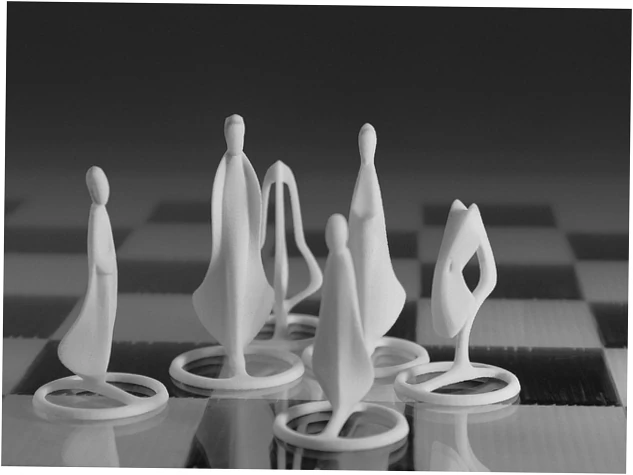
Resin wins on detail and surface finish; filament wins on toughness, cost per part and build volume. A miniature figure printed in resin can look injection moulded straight off the platform, while the same model in FDM shows layer lines that take hours of filling and sanding to hide. Our resin versus filament comparison breaks the trade-off down part by part.
Strength is where the marketing gets slippery. Standard cured resin is brittle and shatters on impact, while standard FDM parts delaminate along layer lines but bend before breaking. Engineering resins and tough blends close part of that gap, yet they cost several times more per litre and often need post-curing under specific wavelengths and temperatures to reach their rated properties.
The purchase price of a resin printer is the smallest line in its budget. Wash-and-cure stations, nitrile gloves, filtration, respirators and either a dedicated room or an exhausted enclosure all belong in the total. Buyers who ignore that arithmetic often discover it the hard way, when a spare bedroom starts to smell and furniture finishes begin to suffer.
| Factor | Standard supplier claim | Reported real-world experience |
|---|---|---|
| Detail | Layer heights down to 0.025 mm | Detail is genuine, but thin features snap during support removal |
| Beginner curve | Both formats deliver professional results | FDM owners describe an easier first week; resin users report weeks of exposure and wash discipline |
| Upfront cost | Entry resin printers are inexpensive | Wash-and-cure, filters, gloves and ventilation regularly exceed the printer price |
| Ventilation | Print in a well-ventilated area | Owners without a separate room report odour, headaches and damaged furniture finishes |
| Strength | Engineering resins rival thermoplastics | Standard resin stays brittle; functional parts often move back to PETG or nylon |
| Finishing | Minimal post-processing required | FDM models still need hours of sanding, filling and priming before paint |
The pattern is consistent: the disagreement is rarely about whether a technology works, but about what it costs in time, space and safety. Specification sheets alone will not tell you whether a resin workflow fits your flat, because that answer depends on your ventilation, your patience and your tolerance for brittle parts that shatter when dropped.
Warping is a thermal contraction problem, not a glue problem. ABS and ASA shrink as they cool, pulling long parts off the bed, which is why an enclosed chamber held at 40 to 50 °C matters more than any adhesive. PLA rarely warps on a clean textured sheet, while PETG bonds to bare glass so aggressively that a release layer becomes mandatory.
The parts touching the bed get blamed for everything: worn nozzles, a warped build plate, a loose eccentric nut or a hot end degrading above 240 °C. Replacing consumables on schedule is cheaper than chasing the same intermittent first-layer failure for weeks, and a small stock of printer parts and accessories prevents most of that downtime.
Nylon, TPU, PETG and polycarbonate absorb atmospheric moisture within days of opening. Wet filament pops, foams and extrudes a stringy bead with poor interlayer bonding, producing parts that snap along layer lines with almost no warning. A heated dryer or a sealed box with desiccant costs far less than the prints you will otherwise waste chasing the wrong diagnosis.
Layer adhesion is governed by nozzle temperature and speed more than by infill percentage. Printing hot and slow lets adjacent beads fuse properly, while printing fast with aggressive part cooling produces a dimensionally accurate but weak part. If a bracket splits along a layer line rather than across it, your bonding temperature is the problem, not the material grade you bought.
Orientation is a structural decision. A part loaded in the XY plane is roughly two to three times stronger than the same part loaded across layers, so rotating a bracket ninety degrees can outperform upgrading from PETG to nylon. Annealing improves heat resistance in semi-crystalline plastics but introduces shrinkage of one to three percent, which ruins tight tolerances unless you compensate.
PLA is compostable only under industrial conditions above 55 °C with controlled humidity; it does not break down in a garden or a landfill at any useful rate. The same limitation applies to most spools. Questions about the recyclability of 3D printed plastic usually end with the same verdict: most curbside programmes reject it outright.
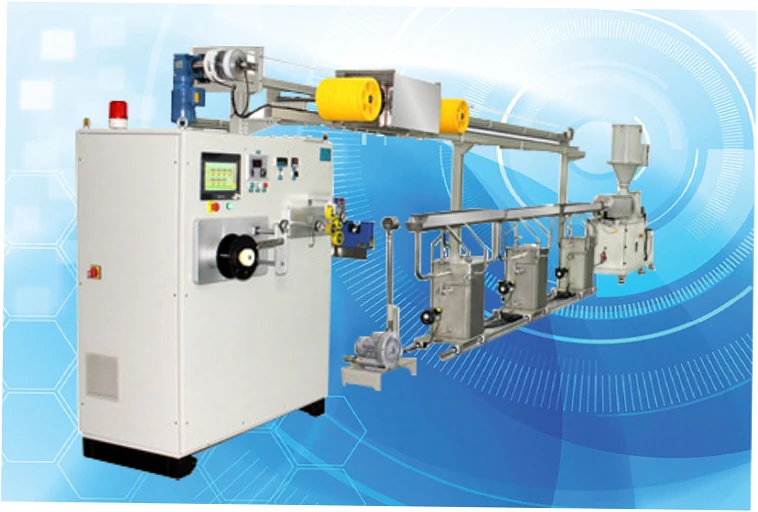
Small-scale recycling does work. A shredder and a desktop filament extruder can turn failed prints back into usable spool, though the polymer degrades slightly each cycle and diameter consistency suffers. Mixing PLA with PETG or ABS in one batch produces brittle, unusable filament, so sorting strictly by polymer type is mandatory before you regrind anything at all.
A spool labelled food safe does not make a printed object food safe. FDM parts are inherently porous, the gaps between layer lines harbour bacteria that washing cannot reliably remove, and brass nozzles can leave trace heavy metals in the surface. That is why food safe 3D printer filament is only one variable in a much larger equation.
Food-grade certification typically applies to the raw pellets, not the finished print. Epoxy coatings seal the surface but crack under heat and knife contact; solvent smoothing reduces porosity but does not sterilise the part. For repeated food contact, moulding or machining remains the safer route, and single-use prints are best treated as disposable items.
| Plastic | Curbside recycling | Small-scale regrind | Food contact suitability | Note |
|---|---|---|---|---|
| PLA | Rarely accepted | Good, slight degradation per cycle | Not recommended | Industrially compostable only |
| PETG | Rarely accepted | Moderate | Dry short-term contact only | Tough regrind, poor heat resistance |
| ABS | Sometimes accepted | Good | Not recommended | Solvent smoothable, styrene emissions |
| ASA | Rarely accepted | Moderate | Not recommended | UV stable, same emission profile as ABS |
| TPU | Not accepted | Difficult due to flexibility | Not recommended | Highly moisture absorbent |
| Nylon | Not accepted | Possible, moisture critical | Not recommended | Strong but hydrophilic |
Layer lines come off either mechanically or chemically. Sanding is universal but slow and rounds sharp corners; acetone vapour dissolves the surface of ABS into a glossy skin within minutes, at the cost of a sealed container and a real risk of sagging. Our guide to smoothing 3D printed plastic compares effort, finish quality and failure risk.
Chemical smoothing only works where the polymer dissolves: acetone for ABS and ASA, dichloromethane for polycarbonate and some resins, and nothing safe for PLA. Solvent vapours are flammable and toxic, so this is workshop work rather than kitchen-table work. Filler primer and epoxy coatings offer a safer alternative at the cost of dimensional growth of 0.05 to 0.2 mm per coat.
| Method | Works with | Time per part | Dimensional change | Main risk |
|---|---|---|---|---|
| Sanding and filler primer | All polymers | Hours | Minimal | Rounded edges, dust |
| Acetone vapour | ABS, ASA, HIPS | 10–40 minutes | Slight softening, sag | Flammable, caustic vapour |
| Dichloromethane dip | Polycarbonate, some resins | 1–5 minutes | Surface only | Toxic, needs fume extraction |
| Epoxy coating | All polymers | Hours plus cure | 0.05–0.2 mm | Runs, cracking, false food-safety claims |
| Heat gun or flame | Most thermoplastics | Seconds | Uncontrolled | Warping, surface burnout |
At some point plastic stops being the right answer. Loads above a few hundred newtons, continuous service above 150 °C, or certification requirements push projects toward industrial metal 3D printing services or conventional machining, where per-part cost is higher but the component arrives with a documented material certificate.
Plastic still wins wherever weight, insulation, chemical resistance or low-volume cost matters more than absolute strength. Industrial polymer systems such as SLS nylon, MJF PA12, PEEK and ULTEM deliver near-isotropic parts without the layer-adhesion anxiety of desktop FDM, and they form the sensible bridge between a hobby machine and a production order.
Write down three things before ordering anything: maximum service temperature, maximum sustained load, and whether the part sees sunlight or solvents. Those three answers eliminate most of the catalogue immediately. If the part must hold a thread or a bearing, add creep resistance to the list, because PLA and standard PETG both creep slowly under constant load.
Filament is the cheap part of the system. Dry storage, a heated dryer, spare nozzles, build sheets and a caliper cost roughly as much as a year of filament, and they prevent most failures people blame on material quality. If you scale beyond a single machine, sourcing from a vendor that also supports industrial 3D printers keeps spares and service in one place.
Be honest about the finish you can actually produce. If visible layer lines are unacceptable and you have no ventilation, resin is not the answer; if you need large, tough parts quickly, FDM is. The right choice is the one whose worst-case failure you can live with, printed in the workspace you genuinely own.
Generally no for repeated food contact. Layer porosity traps residue, and printing surfaces can carry traces from brass nozzles and colourants. PETG and food-grade PLA on a stainless nozzle are the lowest-risk combinations, but even then coatings and cleaning matter more than the spool label. Treat printed kitchen items as short-lived and replace them when surfaces scratch.
It depends almost entirely on UV exposure and heat. Unprotected PLA can embrittle and deform within one summer; PETG survives one to two years before yellowing; ASA and ABS typically manage three to five years. Nylon needs UV-stable coating or pigment, because unmodified grades degrade quickly in direct sunlight. Nothing printed is maintenance-free outdoors.
Rarely. Domestic dishwasher cycles run between 55 and 70 °C, which is above the glass transition of PLA and close to the limit for PETG, so parts relax and distort over repeated washes. Microwave heating concentrates energy unevenly and can soften thin walls. ABS and ASA cope better with warm water but still warp in drying cycles.
Warping comes from uneven cooling, not from bad luck. Long, flat parts shrink as they cool, and drafts, cold rooms or an open frame accelerate that contraction. Raise the chamber temperature, reduce part cooling for the first layers, add a brim, and slow the first ten millimetres. Material choice matters too: ASA warps far less than unenclosed ABS.
Only with genuine ventilation. Resin gives detail that FDM cannot match without hours of sanding and filling, but uncured resin and its vapours require an enclosed, exhausted space, gloves and careful waste handling. Owners in single-room flats frequently report odour and irritation, so an enclosed, filtered setup is a prerequisite rather than an optional upgrade.
Change orientation before you change material. Printing a bracket so layers run perpendicular to the load can double its strength for free. Beyond that, PETG with four to five perimeters and 40 percent infill outperforms exotic spools printed badly. Only after geometry and orientation are optimised is upgrading to nylon or polycarbonate worth the money.
For hygroscopic materials, yes. Nylon, TPU, polycarbonate, PETG and most blends absorb moisture within days and print with popping, stringing and poor layer bonding. PLA is more forgiving but still benefits from drying in humid climates. Six to eight hours at 50 to 70 °C in a dedicated dryer is a reasonable baseline, verified with a cheap hygrometer.