Get Marketing Insights First
Subscribe to receive actionable strategies, growth tips, and industry insights delivered straight to your inbox.

I’ll be blunt: there is no such thing as a truly food safe 3d printer filament straight off a consumer FDM machine—not because the plastic itself is poison, but because the whole chain, from a brass nozzle to microscopic layer gaps, can turn a certified material into a bacteria magnet. If you’re weighing the risks, my broad guide to 3d printer plastic explains the material families, but here I’m drilling into the food-contact question alone. The short answer: PLA and PETG raw resins are generally recognized as safe, yet additives, wear-prone nozzles, and unsealed layer lines mean you must treat every print as potentially contaminated until you take specific countermeasures.
Let’s cut through the feel-good marketing. A filament spool may carry a food-grade certificate, but that document usually covers the raw pellets or the filament as manufactured, not the final object after it has traveled through a hot end, a PTFE tube, and a drive gear. The moment you melt and extrude, you introduce new variables: thermal degradation, metal wear, and a rough surface that traps moisture and organic matter.
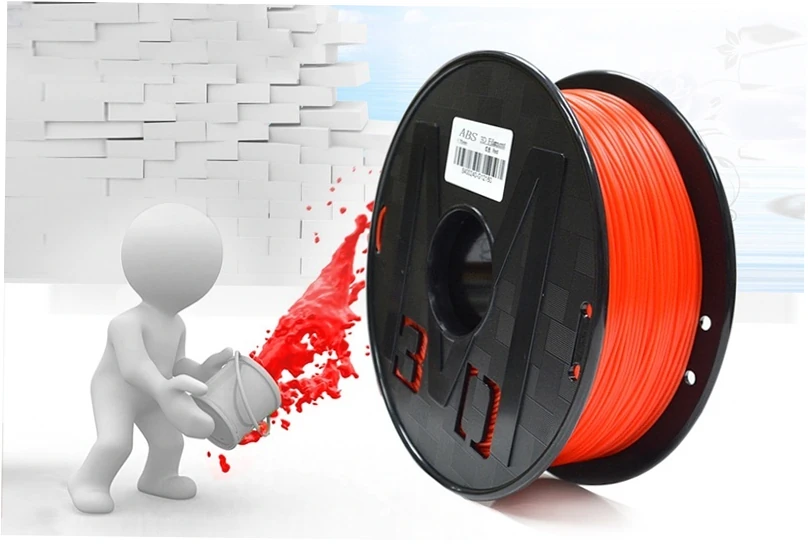
A food-safe filament starts with a base polymer that is chemically inert and non-toxic, such as virgin PLA, PETG, or certain polypropylene blends. Regulatory bodies like the FDA and EU set migration limits for substances that can leach into food. But here’s the catch: those approvals are almost always granted to the material supplier, not to you as the printer operator. Your finished fork or cup has no such certification.
Even the cleanest resin can be compromised by additives. Colorants, plasticizers, and flame retardants are common in hobby filaments. Some pigments contain heavy metals like cadmium or lead. Unless a spool explicitly states “food contact compliant” and lists the specific additives, you cannot assume the color is safe. Natural or clear filament is a safer bet, though not a guarantee.

Your nozzle is a contamination source hiding in plain sight. Brass, the standard choice, is an alloy of copper and zinc, but it often contains trace lead for machinability. At printing temperatures above 200°C, that lead can migrate into the melt. A worn brass nozzle sheds microscopic particles directly into your print. Switching to stainless steel, hardened steel, or a lead-free coated nozzle eliminates this specific risk.
Beyond the nozzle, the filament path matters. PTFE tubing can off-gas at high temperatures, and some extruder gears use lubricants that creep into the filament. If you have ever printed with a glitter or wood-fill filament, residual particles remain in the hot end for many prints afterward. Dedicated food-safe printing requires a dedicated machine or a thorough purge and cleaning protocol.
FDM printing builds objects from stacked layers, creating microscopic grooves between each pass. Those grooves are perfect shelters for bacteria, yeast, and mold. Unlike a smooth injection-molded spatula, a 3D printed one has countless crevices that soap and water cannot fully reach. Even if the plastic itself is inert, the geometry becomes a hygiene problem over repeated uses.
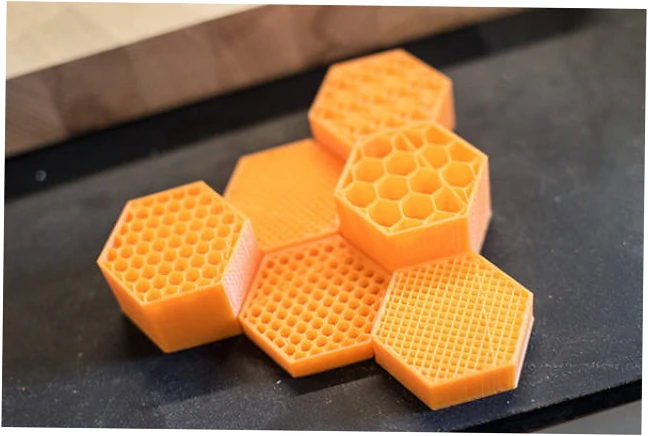
Watertightness is another concern. Many prints are not fully dense; infill patterns leave internal voids. If liquid seeps through the walls, it can stagnate inside the object and breed pathogens. You can mitigate this with higher extrusion multipliers, thicker walls, and vase mode, but achieving a truly watertight, easy-to-clean surface is difficult without post-processing.
PLA is the most common starting point. It is derived from corn starch, generally regarded as safe in its pure form, and has a pleasant, low-odor print profile. However, PLA softens around 60°C, so it cannot handle hot coffee or dishwasher cycles. PETG is tougher, more chemically resistant, and slightly more heat tolerant, making it a better choice for reusable items that will be washed by hand.
Both materials are only as safe as their additives. A natural PLA or clear PETG from a reputable brand that explicitly claims food-contact compliance is your best bet. For a broader breakdown of how these compare to ASA and other plastics, my article on the best filament for 3D printing is worth a read.
TPU is flexible, durable, and sometimes used for items like reusable straws or ice cube trays. Food-grade TPU does exist, but the additive package is critical. Many TPU filaments contain plasticizers or colorants that are not food approved. You need a specific food-contact grade, which is rarer and more expensive. Even then, TPU’s rubbery surface can be harder to clean than rigid plastics.
If you are curious about printing with flexible materials, my TPU filament printing guide covers the practical settings. For food safety, though, TPU is a niche choice. Polypropylene (PP) is another option; it is widely used in food containers, but pure PP filament is uncommon and warps badly unless you have a heated chamber.
SLA resin printing can produce smoother surfaces with fewer layer lines, which sounds promising for food contact. However, uncured resin is toxic and sensitizing. Even after curing, many resins continue to leach chemicals. Food-safe resins exist, but they are expensive and still require a fully post-cured, coated finish. For most home users, FDM with a sealant is more practical than resin.
| Material | Raw Material Food Safety | Additive Risk | Heat Tolerance | Layer Line Bacteria Risk | Best Use Case |
|---|---|---|---|---|---|
| PLA | Generally recognized as safe | High (dyes, plasticizers) | Low (~60°C) | High | Cold, one-time items |
| PETG | Generally recognized as safe | Moderate | Medium (~75°C) | High | Reusable, hand-washed items |
| TPU | Possible with food-grade grade | High | Medium | Very high | Flexible, short-term use |
| ASA | Not typically food approved | High | High | High | Not recommended |
| Resin (SLA) | Specialty food-safe resins exist | Very high (uncured) | Medium | Low (smooth) | Only with certified resin coating |
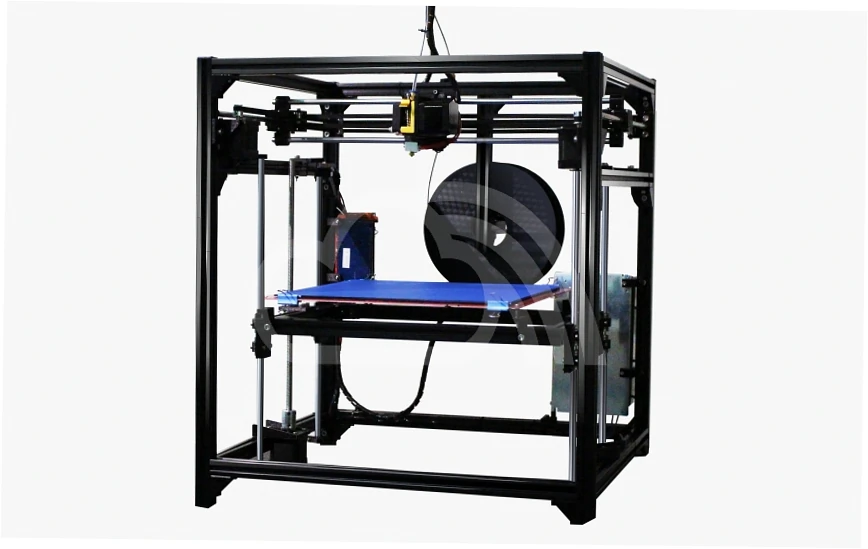
If you are serious about reducing contamination, start with hardware. Replace your brass nozzle with a stainless steel or lead-free coated nozzle. Flush the hot end with a dedicated cleaning filament, then run several meters of your food-safe filament through to purge residuals. Ideally, use a printer that has only ever seen food-grade materials and has no brass or unknown alloys in the melt path.
Check your PTFE tube. If it is white and has been heated above 240°C, it may have degraded. Replace it with a Capricorn or food-grade tube. Clean your extruder gears with isopropyl alcohol and a lint-free cloth. These steps reduce, but do not eliminate, the risk of heavy metal or lubricant transfer.
The most reliable way to make a 3D printed object food safe is to seal it completely with a food-grade epoxy or polyurethane. These coatings fill the layer lines, create a smooth, non-porous barrier, and prevent bacteria from entering the print. Brands like ArtResin (food-safe version) or FDA-compliant epoxy systems are popular. The catch: they require thorough mixing and a full cure, often 7 to 30 days.
Uncured epoxy is toxic. You must follow the manufacturer’s cure schedule exactly. Even after curing, some coatings can impart a faint taste to acidic foods. Test with water first. coatings can chip or wear over time; inspect regularly and re-coat if you see scratches. A sealed print is only as safe as its coating’s integrity.
Once sealed, clean your print with warm soapy water and a soft sponge. Avoid abrasive scrubbers that scratch the coating. Do not put PLA or PETG prints in a dishwasher; the heat will warp them and potentially create new cracks for bacteria. For sanitizing, a diluted bleach solution or food-safe sanitizer can work, but rinse thoroughly and let dry completely.
Inspect your print before each use. Any crack, chip, or discoloration is a sign that the barrier is compromised. For high-risk items like baby bottles or medical devices, skip 3D printing entirely. The margin for error is too small, and commercial food-grade products are affordable and tested.
| Claim or Parameter | Official / Material Standard | Real-World User Feedback |
|---|---|---|
| Material is food safe | Raw resin meets FDA/EU migration limits | Final print has no certification; additives may leach |
| Brass nozzle safety | Not food-grade; may contain lead | Users report metallic taste and wear particles; switch to steel |
| Layer line cleanability | Smooth surfaces are easy to sanitize | Many find bacteria and mold grow in gaps; water seeps into infill |
| Epoxy coating solution | Food-safe epoxy creates a barrier | Requires 30-day cure; some still taste chemicals; chips over time |
| Heat resistance for dishwashing | PLA softens at 60°C; PETG at 75°C | Dishwasher cycles warp prints and crack coatings |
The brass nozzle myth is not a myth—it is a documented concern. Brass often contains 2-3% lead by weight to improve machinability. At typical printing temperatures, lead can vaporize or abrade into the melt. Studies on brass plumbing fittings have shown lead leaching, and the same principle applies here. A single spool of filament may not pick up enough lead to cause acute harm, but repeated use is a cumulative risk.
Stainless steel nozzles are lead-free, but they wear faster with abrasive filaments. Hardened steel or ruby-tipped nozzles are more durable but expensive. If you print food-contact items regularly, invest in a dedicated food-safe hot end. Do not assume a “food-safe” label on your printer means the nozzle is safe; most consumer printers use brass.
Yes, and it is the most persistent criticism of food-safe 3D printing. Layer lines are typically 0.1 to 0.3 mm deep, which is wide enough for bacteria like E. coli and Salmonella to lodge. A 2017 study in the Journal of Food Protection found that 3D printed surfaces harbored significantly more bacteria than smooth controls, even after cleaning. The risk increases with rough prints, low layer adhesion, and infill that traps moisture.
Some hobbyists argue that a well-tuned printer can produce watertight, nearly smooth surfaces. That is partially true for vase mode with thick walls, but it is not a universal solution. The only reliable fix is a non-porous coating. Without it, even a perfectly printed object will develop biofilm over time, especially if used for raw meat or dairy.
A “food-safe” filament certificate is not a permission slip for your final print. It usually states that the material, when properly processed, can be used in food-contact applications. The certificate does not cover your printer’s condition, your nozzle, your layer height, or your cleaning routine. In commercial settings, every step must be validated; at home, you are the quality control.
Look for specific claims: “FDA 21 CFR 177.1520” for polyolefins, “EU 10/2011” for plastics, or “food contact compliant” with a migration test report. Vague marketing terms like “food grade” or “BPA-free” are not enough. If a manufacturer cannot provide a compliance document, assume the filament is not safe for food contact.
For a single-use cookie cutter or a party favor, the risk profile is lower. You can print with natural PLA, use a stainless steel nozzle, and skip the coating if the item touches food only briefly and is not reused. Still, clean it well and avoid hot or acidic foods. For reusable items like cups, bowls, or utensils, you need a sealed surface and a more heat-resistant material like PETG.
Consider the food type too. Dry goods like crackers or raw vegetables pose less risk than wet, acidic, or fatty foods. Tomato sauce, citrus juice, and oils can accelerate leaching from additives. If your project involves any of these, a food-safe epoxy coating is non-negotiable. Prioritize safety over aesthetics.
Food-safe filaments cost more because they use purer resins and fewer questionable additives. Expect to pay $30 to $50 per kilogram for certified PLA or PETG, compared to $20 for standard spools. Specialty food-grade TPU can exceed $60. The price premium reflects testing and compliance, not necessarily better print quality. You are paying for documentation and peace of mind.
Sourcing matters. Buy from brands that publish safety data sheets (SDS) and migration test reports. Avoid no-name spools from marketplaces; they often lack traceability. If you are in the EU, look for the “food contact” symbol and a declaration of compliance. In the US, the FDA does not certify filament directly, so third-party lab tests are your best evidence.
Sometimes the smartest choice is not 3D printing at all. For baby bottles, medical devices, or long-term food storage, injection-molded polypropylene or glass is safer, cheaper, and dishwasher-safe. You can use 3D printing to create a mold and cast a food-safe silicone part instead. That approach combines the customization of additive manufacturing with the proven safety of a smooth, non-porous material.
If you need a custom shape that must be food safe, consider printing a positive and vacuum-forming a food-grade plastic sheet over it. Or use a 3D printed mold for chocolate or candy, where the food contact is brief and the mold can be coated. These hybrid workflows avoid the layer-line problem entirely and often produce better results.
Your action plan is simple: decide whether your item is one-time use or reusable. For one-time, natural PLA with a steel nozzle is acceptable with careful cleaning. For reusable, choose certified PETG, seal it with food-grade epoxy, and cure it fully. Always replace brass nozzles, keep a dedicated food-safe printer if possible, and inspect prints for wear before every use. When in doubt, buy a commercial food-safe product instead.
Remember that food safety is a spectrum, not a binary. You can reduce risk significantly with the right material, hardware, and coating, but you cannot eliminate it entirely in a home FDM setup. Be honest about your risk tolerance, especially if you are printing for children, elderly family members, or anyone with a compromised immune system. A little caution goes a long way.
Pure PLA resin is generally recognized as safe, but repeated use is risky because layer lines harbor bacteria and PLA warps in hot water. A food-safe epoxy coating can make it safer for hand-washing, but never put it in a dishwasher. For frequent food contact, PETG is a better base material.
Brass nozzles often contain lead, which can leach into the filament at printing temperatures. You should switch to a stainless steel or lead-free coated nozzle before printing food-contact items. Even then, clean the entire filament path and purge any previous non-food-safe materials thoroughly.
PETG is a better choice than PLA because it handles higher temperatures, but even PETG will soften in a dishwasher. A food-safe epoxy coating is essential to seal layer lines and prevent coffee from seeping into the walls. Alternatively, use a 3D printed mold to cast a ceramic mug.
Yes, when applied correctly. Food-grade epoxy fills the gaps, creates a smooth barrier, and prevents bacterial growth. However, it must be mixed precisely and cured for the full recommended time, often 7 to 30 days. Uncured epoxy is toxic, and chipped coatings must be repaired or the item discarded.
If you are selling food-contact items or printing for high-risk individuals, yes. The premium covers purity and compliance documentation. For occasional personal use, a standard natural PLA or PETG with a steel nozzle and a sealant can be a reasonable compromise, but you accept more uncertainty.
No, not safely. PLA and PETG both deform at dishwasher temperatures, which creates cracks and exposes new surfaces for bacteria. Hand-wash with warm soapy water and a soft sponge instead. If you need dishwasher-safe items, choose a different manufacturing method like injection molding.
Food-grade TPU exists but is rare and expensive. Many TPU filaments contain plasticizers that are not food approved. Even with a certified TPU, the flexible surface can be difficult to clean. For most food-contact projects, rigid PETG or coated PLA is a more practical choice.